Tokyo Stroll Supplement: Zōshigaya Shichifukujin Meguri / Zōshigaya Seven Lucky Deities Pilgrimage
For information on Tokyo Stroll and this web supplement see Tokyo Stroll Supplement home page
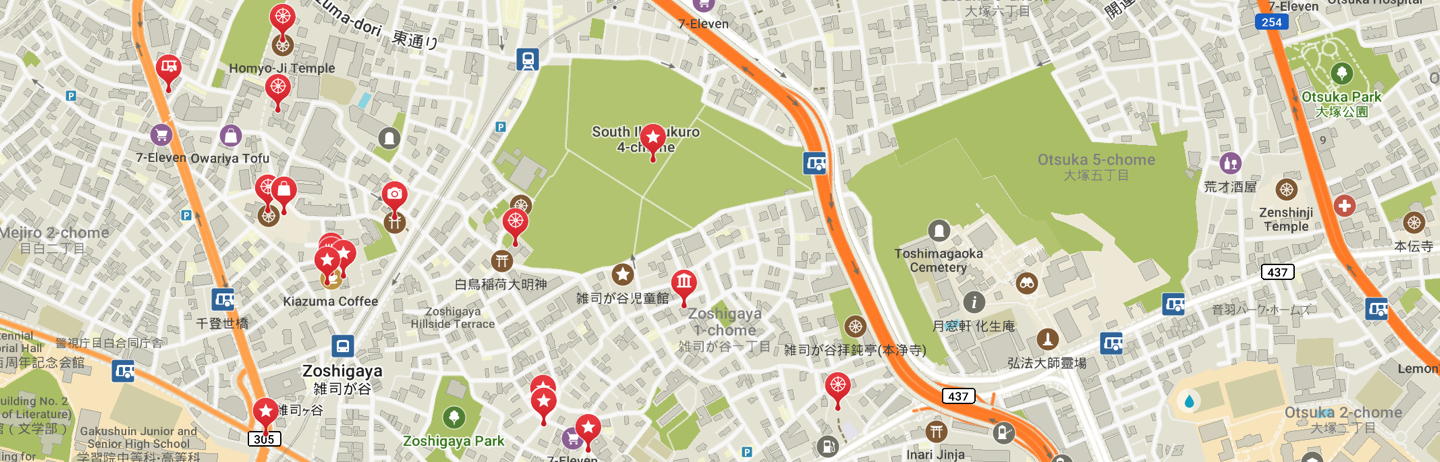
For users of the Organic Maps, Maps.Me and Google Maps apps the items below have bookmarks you can import into those apps to make navigation easier.
Instructions and links are on the Viewing Locations in Organic Maps, Maps.Me, Google Maps, or Google Earth page.
Zōshigaya Shichifukujin Meguri / Zōshigaya Seven Lucky Deities Pilgrimage (雑司が谷七福神 めぐり)
The Zōshigaya Shichifukujin Meguri can be done anytime as the pilgrim handles the stamping of the shikishi with a red seal on their own at each location, most such pilgrimages are only at the beginning of the year.
You can apparently only get the shikishi for this pilgrimage at these locations: Zōshigaya Ōtori Jinja, Zōshigaya Kishimojindō Temple, Mitakesan Seiryūin and the Zōshigaya Information Center. The Zōshigaya Information Center sells two other designs that are fancier with color images and cost a little more.
Walking Distance: Approximately 3.7 km.
I'll leave deciding on the specific the route up to you, there is no specific sequence you have to follow. Some of the pilgrimage sites are described on the Ikebukuro Station Area page and some on the Zōshigaya Station Area page as the route spans both. This pilgrimage route is a relatively recent one which was started in 2011.
NOTES:
The place to stamp on the shikishi in the descriptions for each location are for the design that only has kanji on it.
A web site that was useful in putting together this information, which has a map, is:
https://jigsaw-japan.com/2020/07/20/chasing-an-unusual-seven-lucky-gods-in-zoshigaya/
Kanjōin (観静院)
Kanjōin is a Nichiren-shū temple established in the Keicho era (1596-1615).
PILGRIMAGE: This temple is on the Zōshigaya Shichifukujin Meguri route for Benten, also called Benzaiten. A statue of her is to the left as you enter the grounds. If you have the shikishi from Otori Jinja place the stamp at the bottom center.
NEAREST TRAIN/SUBWAY STATION: Toden-zoshigaya Station (Toden Arakawa Line)
WEB: https://temple.nichiren.or.jp/0021031-kanjoin/
Mitakesan Seiryūin (清立院)
Originally this was a Shingon temple called Seiryūji founded in the Kanki Era (1229-1232) the name was change to Seiryuin when the temple affiliated with the Nichiren sect around 1675. Behind the temple is an eleven headed kannon statue with nearby stone depicting the area in the Edo Period. The temple was considered a place to pray for relief from skin diseases and the Edo Meisho Zue notes that farmers would pray for rain here. One of the trees on the grounds is called the "Rain Prayer Pine."
NEAREST TRAIN/SUBWAY STATIONS: Kishibojimmae Station (Toden Arakawa Line), Zoshigaya Station (Tokyo Metro Fukutoshin Line)
PILGRIMAGE: This temple is on the Zōshigaya Shichifukujin Meguri route for Bishamonten. The statue of Bishamonten is a designated cultural property of Toshima Ward. Place your stamp on the center-left of the shikishi.
WEB: http://seiryuin.or.jp/en/
Seido Kishimojindō (清土鬼子母神堂)
A Nichiren temple to Kishimojin, this small temple is at the location where the statue of Kishimojin enshrined at Zōshigaya Kishimojindō was excavated here in 1561. This temple also has an unusual triangular well where it is said the statue was purified.
PILGRIMAGE: This is a Zōshigaya Shichifukujin Meguri site as there is a statue of Kisshōten, who is also called Kichijōten. She is sometimes listed as one of the seven lucky gods in place of either Jurōjin or Fukurokuju. The red stamp on your shikishi goes at the middle right.
NEAREST TRAIN/SUBWAY STATION: Gokokuji Station (Tokyo Metro Yūrakuchō Line)
NOTES:
The temple is in a residential area with the entrance to the south.
This temple is actually in northern Bunkyō-ku.
Sengyōji (仙行寺)
This Nichiren Buddhist temple was founded in the Edo Period. The temple was destroyed in the firebombings of WWII with only a stone statue remaining. The current building was designed by Harada Masahiro and was completed in 2018. It is very modern, a seven story structure with local trees and shrubs on each level making the building stand out as very green in relation to its neighbors. The ground floor has a massive statue of the Buddha that seem to more float than sit on the floor, other floors provide traditional functions with the top floor housing the prayer hall.
NEAREST TRAIN/SUBWAY STATIONS: Ikebukuro Station (JR Yamanote Line, Saikyō Line, Shōnan–Shinjuku Line, Seibu Ikebukuro Line, Tōbu Tōjō Line, Tokyo Metro Fukutoshin Line, Tokyo Metro Marunouchi Line, Tokyo Metro Yūrakuchō Line), Toden-zoshigaya Station (Toden Arakawa Line)
PILGRIMAGE: Sengyōji is on the Zōshigaya Shichifukujin Meguri, a wooden statue of Hana no Fukurokuju, a female version of Fukurokuju is enshrined here to the right of the main hall. Here you can stamp the lower right-hand corner of the shikishi if you have one.
WEB: http://www.sengyoji.jp
Zōshigaya Kishimojindō (雑司ヶ谷鬼子母神堂)
A Nichiren sect Buddhist temple which houses a statue of Kishimojin who is associated with easy childbirth, protects children, and in Pure Land Buddhism is considered a generally protective Bodhisattvā. Presently this temple is a branch temple for the nearby Ikōsan Hōmyōji in Minami Ikebukuro. The origin tale of the temple tells of farmers finding a buried statue and building a hut to protect it. The current honden, main hall, was built in 1664 with funds donated by Princess Man the wife of Asano Mitsuakira the daimyō of Hiroshima-han which accounts of some Aki region architectural details. There were 58 carpenters who worked on the building and the chief carpenter was Tanaka Shōdayū Munetomo. The building with its attractive carvings and survived the bombings of WWII, in 1960 it was declared a Tangible Cultural Property of Tokyo and was later designated a National Important Cultural Property in 2016. The temple underwent extensive restoration from 1976 to 1979 to restore it to the look it had in the Edo Period. To the left of the hall is a huge ginkgo tree planted in the Ōei Era (1394-1427) by Sojo Nichiryu, In the Edo Period there was a belief that women who hugged the tree would have children. The tree was designated a National Natural Monument (second class) in 1930, this designation was canceled in 1956 and later that year the tree was designated as a Natural Monument of Tokyo. There is a stone monument in front of the tree with “Natural Monument, Ginkgo of Kishimojin” inscribed on it. The tree was also designated a Toshima City Important Trees for Landscape in 2017. The grounds also include an Inari shrine where Uka no mitama no mikoto is enshrined which predates Zōshigaya Kishibojindō.
The temple is known for selling susuki mimizuku, small owl figures made from susuki grass that originated here when a local girl started making and selling them to buy medicine for her mother. However if you are traveling from overseas and buy one be sure to have agricultural inspectors at customs inspect the owl when you return as it may harbor foreign pests.
NEAREST TRAIN/SUBWAY STATIONS: Kishibojimmae Station (Toden Arakawa Line), Zoshigaya Station (Tokyo Metro Fukutoshin Line)
PILGRIMAGE: This temple is on the Zōshigaya Shichifukujin Meguri route for Daikoku. The description of where the ink pad and stamp for your shikishi is that I found states "a small hut on the right as you enter the temple grounds." However it does not say which entrance. I assume it is the one on the north east not far from the Kishimojin Omotesandō. The upper right-hand corner is where you stamp the shikishi. A Japanese tradition says that Daikokuten is the husband of Kishimojin.
EVENTS:
Temple fairs every month on the 8th, 18th, and 28th.
On October 16th - 18th the large Oeshiki to commemorate the death of Nichiren is held.
WEB: https://www.kishimojin.jp
Zōshigaya Ōtori Jinja (雑司が谷 大鳥神社)
This shrine dates from 1712 when it was set up to protect against pox and is considered the guardian shrine of Zōshigaya. Before the area was urbanized this shrine was popular with farmers who prayed here for good crops. Zōshigaya was famous for its eggplants and the shrine grows them in pots on the grounds. Something else you will see at the shrine is the motif of money bags on various decorations, even the donation box is shaped like one.
NEAREST TRAIN/SUBWAY STATIONS: Kishibojimmae Station (Toden Arakawa Line), Zoshigaya Station (Tokyo Metro Fukutoshin Line), Toden-zoshigaya Station (Toden Arakawa Line)
PILGRIMAGE: This shrine is the Zōshigaya Shichifukujin Meguri shrine for Ebisu and a good place to buy a shikishi for the pilgrimage. Ebisu is associated with commerce and the statue of him here has hin seated on a money bag. The stamp for the shikishi here is next to the temizuya where you purify yourself. Place the stamp on the upper left corner of the shikishi.
ACCESS: Close to, and between, Toden-Zōshigaya Station on the Toden Arakawa Line or Zōshigaya Station on the Tokyo Metro Fukutoshin Line.
FESTIVALS: Tori no Ichi in November.
WEB: https://shinto-shrine-ootorijinja.business.site/
Zōshigaya Shichifukujin Hoteison (雑司が谷七福神 布袋尊)
A roadside shrine for Hotei.
This shrine is on the Zōshigaya Shichifukujin Meguri route for Hotei.
The stamp for this location goes in the lower left-hand corner of the shikishi.
Back to the Tokyo Stroll Supplement home page - Privacy Notice - Back to Gilles' home page
Created March 14, 2023 | Content last updated August 23, 2026